Stelar and HTS-110 Reveal the 3Tracer 2.0
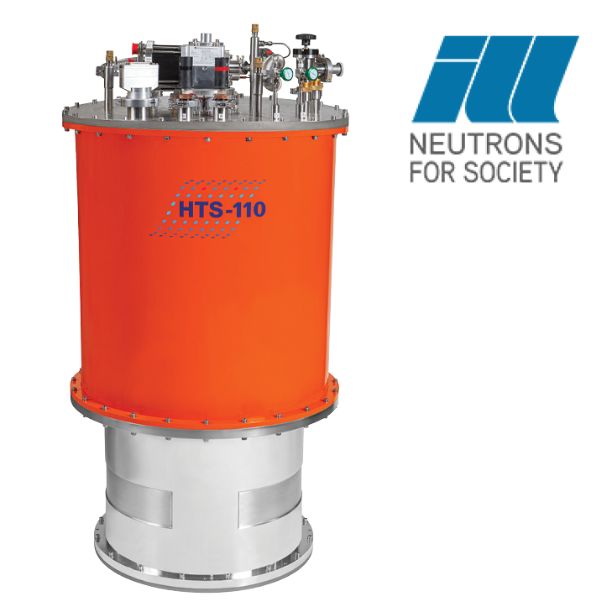
Researchers no longer need to walk across campus or navigate liquid helium logistics to access high-field variable relaxometry. For over two decades, HTS-110’s cryogen-free magnets have moved advanced analytical capability directly into the lab, stripping away the reliance on volatile helium supplies. Today, Stelar s.r.l. and HTS-110 take that mission a step further by enhancing the user interface and streamlining the laboratory footprint with the global launch of the 3Tracer HF Relaxometer 2.0.
The Usability Revolution: HTS Power on your Bench
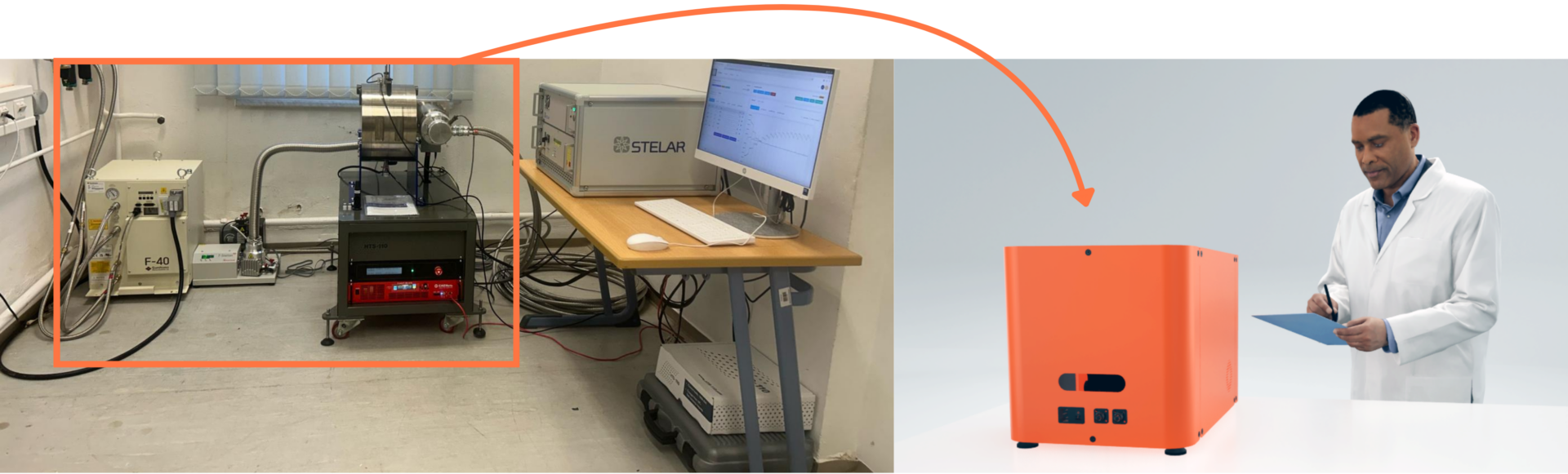
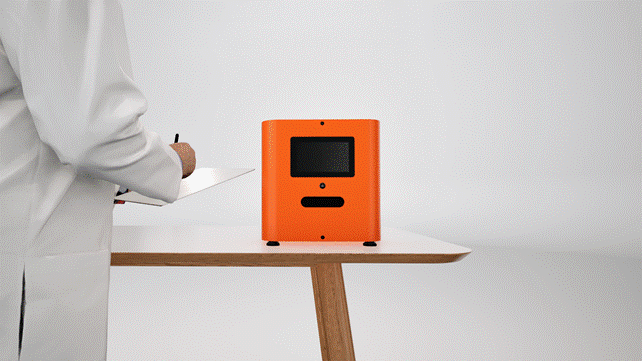
This system moves high-field metrology directly to the benchtop and is powered by a standard wall outlet. It takes HTS-110’s 0–3 T variable-field architecture, which is deployed in over a dozen research facilities, then radically simplifies the user experience. By leveraging second-generation HTS conductors, the 3Tracer 2.0 delivers a plug-and-play system that eliminates the infrastructural burdens of traditional NMR instruments.
Conventional NMR typically measures relaxation at a single, fixed magnetic field; however, molecular dynamics are strongly field-dependent. Fixed-field measurements often hide critical information regarding slow molecular motions and correlation times. The 3Tracer 2.0 allows researchers to vary the magnetic field with precision and stability.
Unlike traditional resistive FFC magnets designed for rapid switching, the HTS-110 architecture provides stable field set-points that the system can maintain indefinitely. This allows users to either step through the 0–3 T range to reveal a complete NMRD profile from 10 kHz up to 128 MHz, or lock the system at a specific target field for high-sensitivity, long-duration investigations. These stable set-points align perfectly with modern clinical 1.5 T and 3.0 T MRI scanners, allowing researchers to simulate clinical environments exactly and translate benchtop results directly to diagnostic imaging protocols.
The first-generation 3Tracer required over 4 kW of three-phase power and external water-cooling. Version 2.0 changes the equation. “The 3Tracer 2.0 represents a definitive shift in how laboratories interact with high-field metrology,” said Donald Pooke, CEO of HTS-110.
“Researchers told us, quite simply, that they don’t want to walk across campus to a dedicated NMR facility. They want the instrument directly by their bench. We took our proven 3 tesla architecture, upgraded it to ReBCO and further reduced the facility burden. No three-phase power, no facility water, no cryogenic liquids.” Dr. Donald Pooke
Pioneering the 2G Compact HTS Portfolio
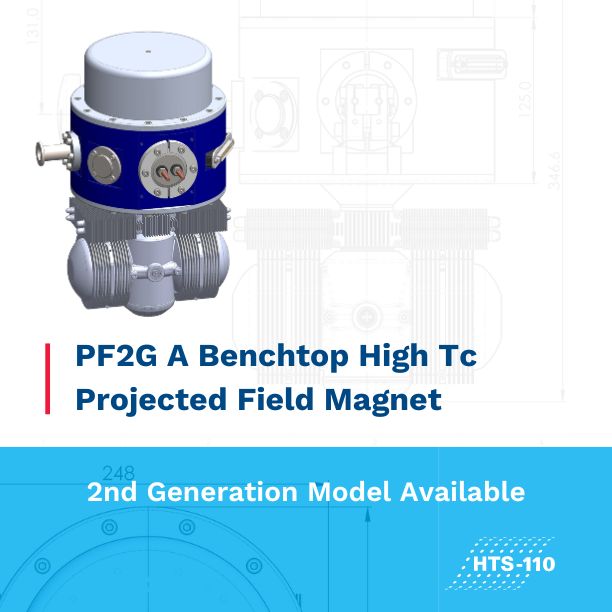
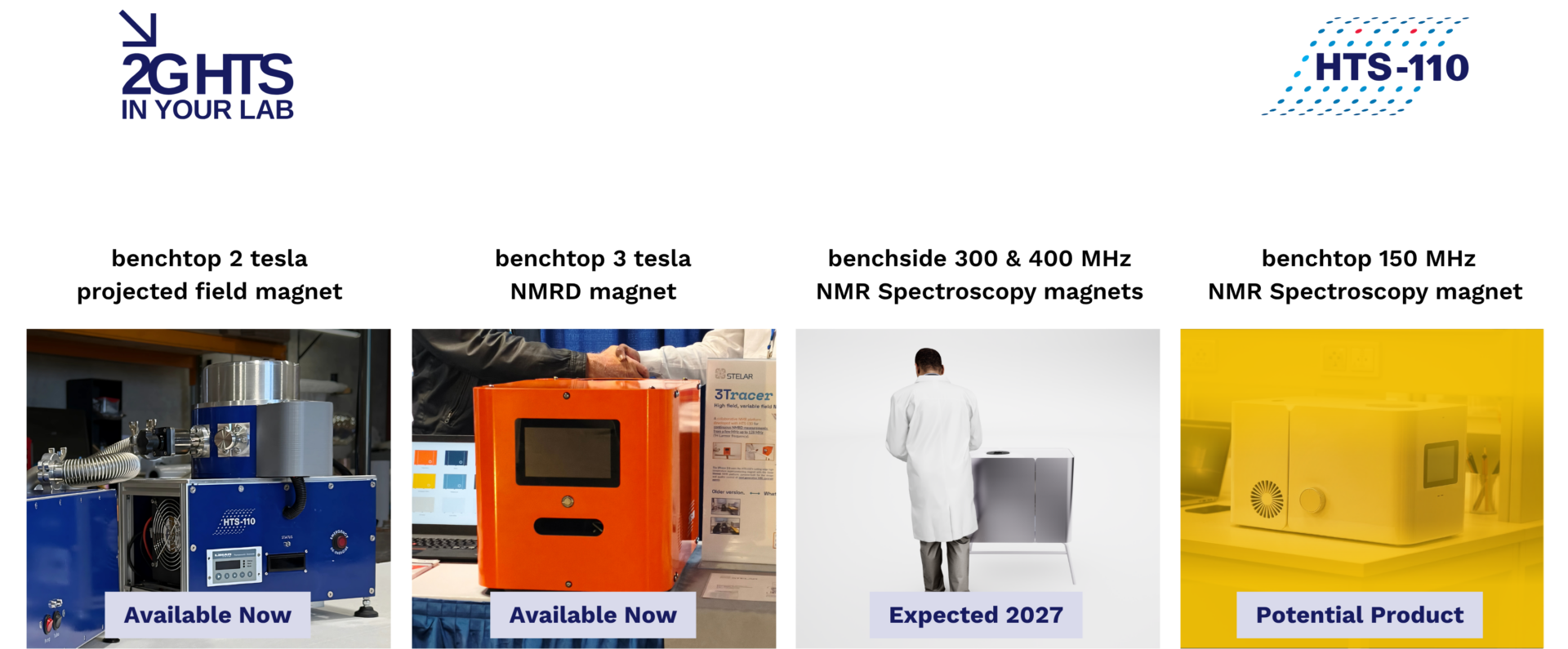
The 3Tracer 2.0 is the inaugural release in HTS-110’s new line of compact NMR magnets. It is the second system in the company’s expanding compact 2G HTS portfolio, following the benchtop 2 tesla projected field magnet.
This next-generation compact lineup leverages 2nd-generation (2G) high-temperature superconductors, specifically ReBCO (Rare-Earth Barium Copper Oxide) tape. By mastering 2G technology, HTS-110 delivers powerful, highly uniform magnetic fields without the weight or the supply chains associated with liquid helium.
Specialist Teams Working Together
The HTS-110 and Stelar s.r.l. teams worked in close, continuous collaboration to ensure the successful development and launch of this new NMR instrumentation platform, which combines advanced magnet technology with a fully re-engineered user-centric workflow for variable-field, high-field NMR relaxometry directly at the benchtop.
This achievement is the result of a tightly integrated effort across hardware design, superconducting magnet engineering, and NMR hardware and software architecture developed in parallel with application-driven validation.
Beyond core R&D activities, the entire technical organization contributed with precision and attention to detail, from early-stage system definition and prototyping, through iterative performance optimization, up to the refinement of the user interface and operational workflows.
Equally important, the collaboration extended into downstream phases of product positioning and dissemination, with marketing and sales teams actively involved from the outset to ensure that the system’s capabilities are clearly translated into value for the scientific community. This end-to-end cooperation now supports the transition from development to deployment, enabling the technology to reach laboratories where it can have immediate impact.
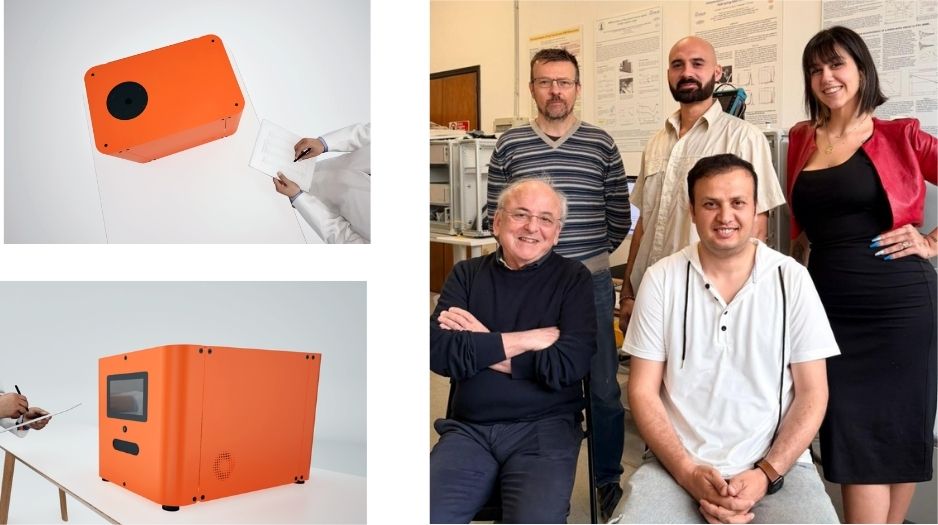
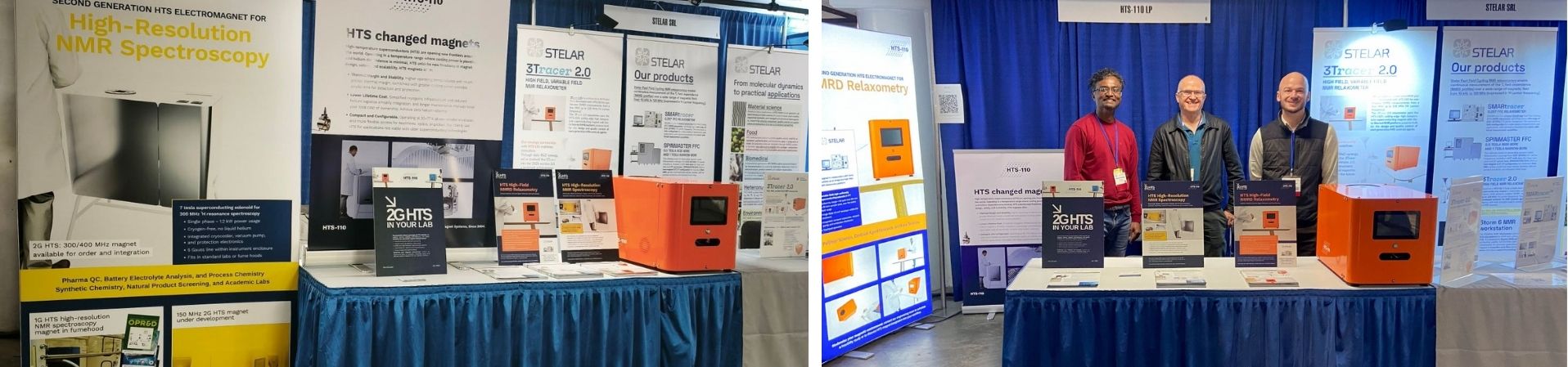
Stelar team photo from left to right (top row, then bottom row)
- Matteo Polello – Service engineer
- Edoardo Pinna – Software engineer
- Ilenia Nicastro – Marketing and sales manager
- Gianni Ferrante – CEO
- Imran Sarwar – Hardware engineer
What’s New in Version 2.0?
The 3Tracer 2.0 retains the same 0-3 tesla variable field range and high-precision field uniformity (< 50 ppm) of its predecessor, but introduces a completely re-engineered user experience:
- Compact Benchtop Footprint: The entire integrated magnet system sits comfortably on a laboratory bench.
- Drastically Reduced Weight: The redesigned superconducting magnet core weighs approximately 56 kg.
- Ultra-Low Power Draw: The Cryocooler operates on less than 500 W from a standard single-phase wall outlet.
- Maintenance-Free Cooling: The air-cooled system uses a sealed-for-life cryocooler and requires zero facility water.
- Automated Sub-Systems: Integrated electronics manage vacuum levels and system protection automatically.
- Modernised Interface: Stelar’s Storm6 analysis software integrates fully via an intuitive touchpad interface.
Broadening Analytical Horizons
The ability to explore relaxation beyond a single field makes FFC NMR and NMRD profiling an essential tool across multiple scientific domains:
- Biomedical & Clinical MRI: Characterize relaxivity for next-generation contrast agents at clinical field strengths up to 3 T.
- Material Science & Energy: Analyze electrolytes, ionic systems, and polymer chain mobility for battery research.
- Food Science: Perform non-destructive quality control on dairy products or sugar-substituted chocolates.
- Environmental & Petrochemical: Evaluate 3D conductivity networks and wettability in porous rock cores.
Scientific Context & Peer-Reviewed Research
The 3Tracer 2.0 provides the empirical data required for the sophisticated relaxation models used in modern material and life sciences. The following publications highlight the critical role of NMRD profiling in diverse fields:
- Tissue Differentiation: Advanced Interpretation of FFC NMR Dispersion Profiles – Shows how the 3-Tau model differentiates healthy and pathological tissues.
- Contrast Agent Development: High-field liquid state NMR hyperpolarization: a combined DNP/NMRD approach – Explores the synergy of DNP and high-field relaxometry.
- Food Authentication: Universal 1H Spin–Lattice NMR Relaxation Features of Sugar – Establishes quality markers for crystal sugar and complex mixtures.
- Ionic Liquid Dynamics: Probing anisotropic and internal motions in ionic liquids with FFC NMR – Validates NMRD for understanding transport in energy materials.
- Polymer Dynamics: Fast-field-cycling NMR: Applications and Instrumentation – A foundational text on the evolution of FFC techniques.
- Art Conservation: Drying effects in tempera paint films explored through NMR – Monitors non-destructive phase changes in cultural heritage materials.
- Porous Media: Applications of FFC NMR to Nanoporous Structures – Discusses variable field relaxometry in shale rock and heterogeneous environmental samples.
- Instrumentation Benchmarks: Storm6: A Unified Platform for FFC NMR Analysis – Validates the acquisition workflows integrated into the 3Tracer 2.0.
Discover Easy Variable Field Relaxometry with Stelar
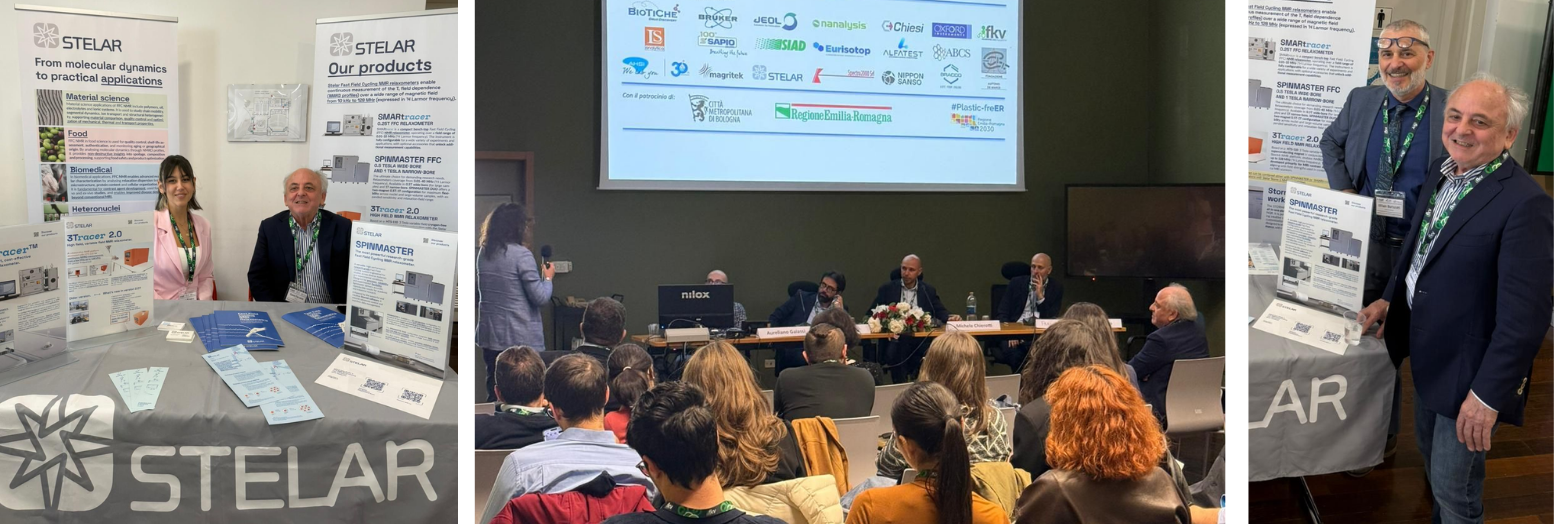
The complete 3Tracer 2.0 system and console are available to order immediately through our partner, Stelar, with first deliveries expected in the second half of 2026. Learn more about the 3Tracer HF Relaxometer 2.0 globally throughout Stelar’s 2026 scientific conference circuit:
- FBNL MR Meeting – Lille, France, 2–5 June.
- MRFOOD 2026 – Milan, Italy, 9–12 June.
- 14th FFC Conference – Paris, France, 16–19 June.
- Molecular MRI Meeting – Turin, Italy, 21–24 June.
- 53rd National Conference on Magnetic Resonance – Caserta, Italy, 9–11 September.
- GIDRM Day focused on relaxometry – Alessandria, IT, 22 September.
(For researchers requiring contract FFC NMR analysis, commercial services are available through Stelar’s network of analytical partners).

Founded in 1984 in Mede, Italy, Stelar is the global leader in Fast Field Cycling (FFC) NMR relaxometry. The company is dedicated to the continuous development and diffusion of FFC NMR instrumentation for both academic research and industrial process control.
Connect with the HTS-110 Engineering Team
We invite researchers who are integrating NMR into their lab environments to join our HTS for Magnetic Resonance User Focus Group as we finalise our next generation of compact NMR magnets scaling up to 400 MHz. For feasibility studies, custom integration inquiries, or technical questions please contact our R&D team, or view the HTS-110 Product Portfolio.
Established in 2004 in Lower Hutt, New Zealand, HTS-110 is a specialist designer and manufacturer of high-temperature superconducting (HTS) magnet systems. The company provides bespoke and turnkey cryogen-free magnet solutions to leading national research institutes and industrial clients globally.
Media Enquiries: please email t.brown@hts-110.com to request interviews, images, or a full press kit.
Innovation News Network Coverage
Back to all News